"If Music Be the Food of Love, Play On"
~
Shakespeare's 'Twelfth Night'
~
"If Music Be the Food of Love, Play On" ~ Shakespeare's 'Twelfth Night' ~
UPCOMING CONCERT details…
Alleluia! Laudamus Te
Twelfth Night
An Irving Berlin Christmas
A Christmas Festival & More…
Including
‘Twas the Night Before Christmas
narrated by Dr. Jerron Jorgensen DMA, SOU
FREE HOLIDAY CONCERT
Sunday, December 14th @ 3:00 PM
Stedman Auditorium at Oakdale Middle School
815 S. Oakdale Avenue, Medford, OR
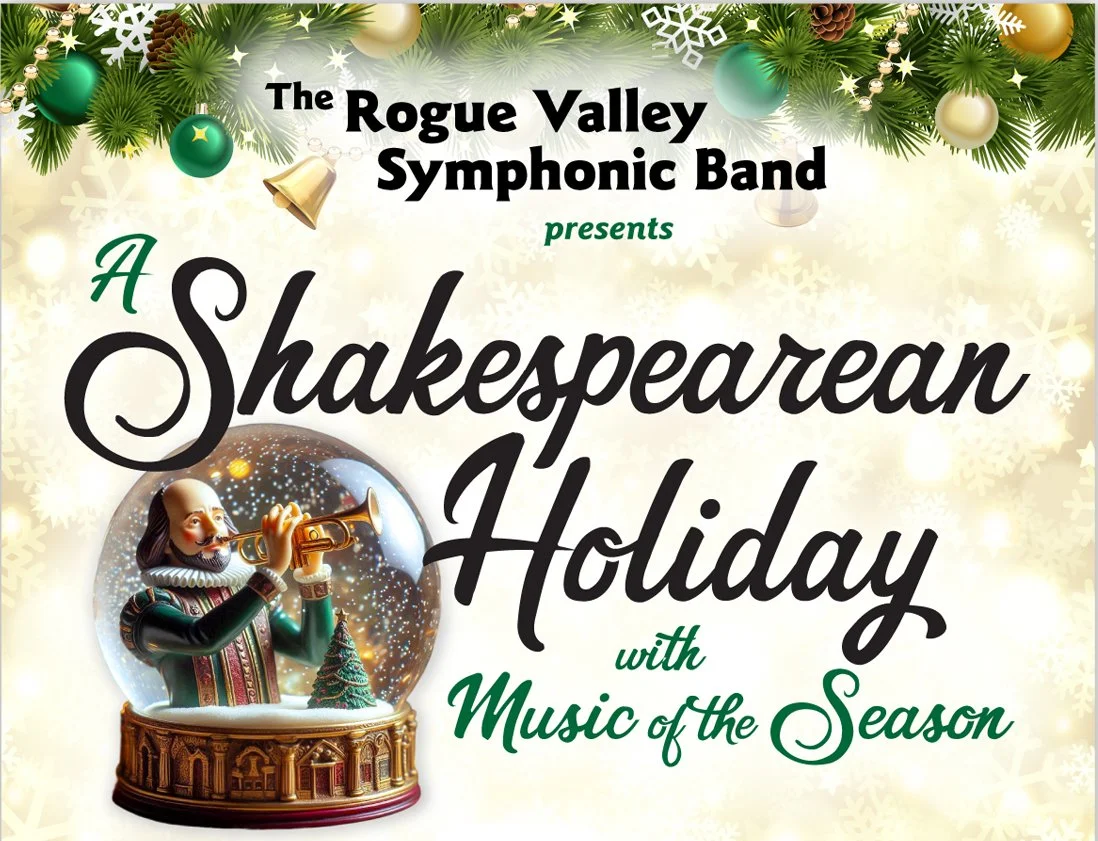
RVSB’s December 14th concert
“A Shakespearean holiday”
Featuring Music of the season
Dr. Jerron Jorgensen
”a shakespearean holiday” program notes
Researched and Written by RVSB Librarian Ed Wight
Alleluia! Laudemus Te
The Christmas holidays are a time of celebration. Though not written specifically for Christmas, Alfred Reed wrote this as a “Celebration Hymn” – and its spirit provides an appropriate opening for a December holiday concert. Laudemus te translates as “We praise you.” Reed is one of America’s greatest concert band composers, with over 250 compositions played round the world. He wrote this as a commission for the band program at Malone College in Ohio, and when he died in 2005, he had still accepted enough similar commissions for the next 20 years. It begins and ends with a glorious fanfare. In between Reed writes a long lyrical melody for woodwinds and horns (introduced by clarinets) and a more martial theme dominated by the brass. But in typically rich Reed fashion, he lets all sections share in that latter theme.
Eighth Candle
Steve Reisteter composed this piece for a band conductor requesting a work celebrating Hanukah. This holiday commemorates the Jewish fighters known as the Maccabees and their victory over the Syrian forces of Antiochus in 168 BC. In celebration, there was supposedly only enough lamp oil for a single day – but it miraculously burned for eight days instead. In modern celebrations they light candles for eight days, but most Menorahs hold nine candles – the extra one lighting the others.
Reisteter subtitles this piece ‘Prayer and Dance for Hanukah. ‘The piece opens with a contemplative, reverent and hopeful prayer. The Dance – a celebration after the victory – is wonderfully lively, with the free and constantly shifting metric style of Mid-East rhythms – passages is 5/8, 4/4, 5/4 and ¾. Reisteter composed all the themes for the piece. Yet it is so well and authentically written, Jewish conductors have asked him where he found these folk-tunes they hadn’t heard before!
Sussex Mummers
Bela Bartok and Zoltan Kodaly remain justifiably famous for the pioneering ethnomusicological folksong collecting. They began travelling into peasant villages in 1905-06 and making recordings of these songs, then transcribing them. Their first folksong publications appeared in 1906. What is not so well known is that Australian-born Percy Grainger accomplished the same feats in England at that time. He’d settled in England in 1901, joined the English Folk Song Society in 1905, and in 1906 was taking similar recording equipment into English villages to collect the songs. Sussex Mummers was first written down in Sussex in the early 1880s with the title Tipteers or Tipteerers. This gentle piece concludes with a blessing on “Your house, children, cattle and store; may the lord send you more and more.” Grainger made a piano version of it 1911, and later a string orchestra version as well. Richard Franko Goldman urged Grainger to make a concert band arrangement. Grainger agreed, but it was left unfinished at his death – and Goldman completed the arrangement we all perform today.
‘Twas the Night Before Christmas
All the highlights of Clement Moore’s beloved Christmas poem appear in this narration with band accompaniment. Jack Bullock wrote the arrangement, and had a great deal of fun with it. You can’t take this piece seriously for a single moment! Soon after Santa’s sleigh appears, we get a few bars of Handel’s Hallelujah Chorus. When he pops down the chimney, Bullock gives us a quick excerpt of ‘Chim Chim Cher-ee’ from Mary Poppins. And Santa opening his sack is of course accompanied by the familiar strains from Babes in Toyland. Be prepared to chuckle. A lot!
We Wish You a Klezmer Christmas
The Klezmer throughout history were excellent professional musicians in the Jewish communities of Eastern Europe. They performed for festive social and civic occasions, especially weddings and important feast days. Though temporarily prevented from playing on Christian Holy Days, the Archbishop of Prague restored that right in 1741. In the 19th-century, Leipzig Klezmerim performed for Mendelssohn. In the last two centuries, the clarinet has become associated with a traditional Klezmer sound, and We Wish You a Klezmer Christmas opens with a clarinet solo. That is also the last serious moment in the piece, and some traditional Klezmer rhythms and scoring enliven three familiar Christmas carols. We wish you a Merry Christmas, Hark the Herald Angels Sing, and Deck the Hall all appear – in the wrong keys! Mendelssohn wrote ‘Hark the Herald Angels Sing’ and he’s turning in his grave...
A Christmas Festival
LeRoy Anderson’s career demonstrates the importance of excellence – and timing. If there was ever a perfect match between a person and their moment, Anderson provided a wonderful example. His light classical orchestral style, long associated with Arthur Fiedler and the Boston Pops for two decades after World War II, produced hit after hit. His 1952 Blue Tango was the first pop instrumental piece to sell over a million copies. By 1953 a study found him to be the most popular and most-performed American composer on orchestral concerts nationwide – five years after Sleigh Ride became a perennial staple on almost every Christmas concert! In A Christmas Festival, he turns to a series of familiar carols that include audience performance. Join us in a spirited Sing-along of some favorite songs of the season.
Twelfth Night
Alfred Reed’s lighthearted depiction of scenes and characters from Shakespeare’s Twelfth Night provides the centerpiece of today’s concert. Shakespeare set his comedy of gender disguise and the resulting mistaken identity at Christmas time; the title Twelfth Night refers to the festival at the end of the twelve days of Christmas. A shipwreck separates the twins Viola and Sebastian. Now alone, Viola disguises herself as a man for protection. She falls is love with Duke Orsino, but he wants ‘her’ to woo his beloved, Olivia. But Sebastian finally appears and falls in love with Olivia – and she with him. After much hijinks, a double wedding unites all the lovers on the final day of Christmas.
The masque was a staged entertainment involving poetry, music and elaborate sets, reaching its peak in England in the early 17th century. Alfred Reed composed Twelfth Night (2003) in five movements..., calling it “A Musical Masque after Shakespeare.” The band plays four of them. The first movement offers a (primarily) festive Prelude, though a slow middle section hinting at the comic complications to come. The third movement (The Merry Conspirators) depicts the shenanigans involved in tricking Malvolio, who in the 4th movement offers his heartfelt Malvolio’s Lament from prison. In the final movement, after he’s released and all is forgiven, Reed depicts a lively conclusion: A Double wedding, and All’s Well. Twelfth Night contains the great Shakespeare poem “If Music be the food of Love, Play on!” - wonderfully captured throughout by the dean of American band composers, Alfred Reed.
An Irving Berlin Christmas
As we progress ever further into the 21st century, it becomes increasingly hard to remember what a giant Irving Berlin was. With over 1500 songs, The New Grove Dictionary states that “Berlin is perhaps the most versatile and successful American popular songwriter.” He wrote both the words and music for 19 Broadway musicals from 1914 to 1962, and another 18 movie musicals. Berlin is the only composer to write a hit musical during World War I (Yip, Yip, Yaphank) and another one for World War II (This is the Army). His 1938 song White Christmas is still recognized as the most popular American song ever. He waited for the right show to introduce it, and that opportunity came with the Christmas scene in the 1942 movie Holiday Inn starring Bing Crosby, Fred Astaire, and Marjorie Reynolds. Crosby’s 1942 recording is the best-selling single of all time, with over 50 million copies sold worldwide. Warren Barker’s concert band medley An Irving Berlin Christmas features three songs from that movie. It opens with Happy Holidays, and closes with Let’s Start the New Year Right. And they frame the champion centerpiece, a heartfelt setting of White Christmas.
Enjoy Music & Information from Our Concerts
-

Archive: Past Concert Program Notes
-

COMING SOON! "A Shakespearean Holiday" Concert, December 14, 2025
-

"FRIGHTS, FEARS & FUN" CONCERT, OCTOBER 26, 2025
-

"THIS LAND IS YOUR LAND" CONCERT, May 2025
-

"Resounding Light" Concert, March 2025 (middle school initiative + mental health & music info)
-

"Harmonies for the Holidays" Concert, December 2024
-
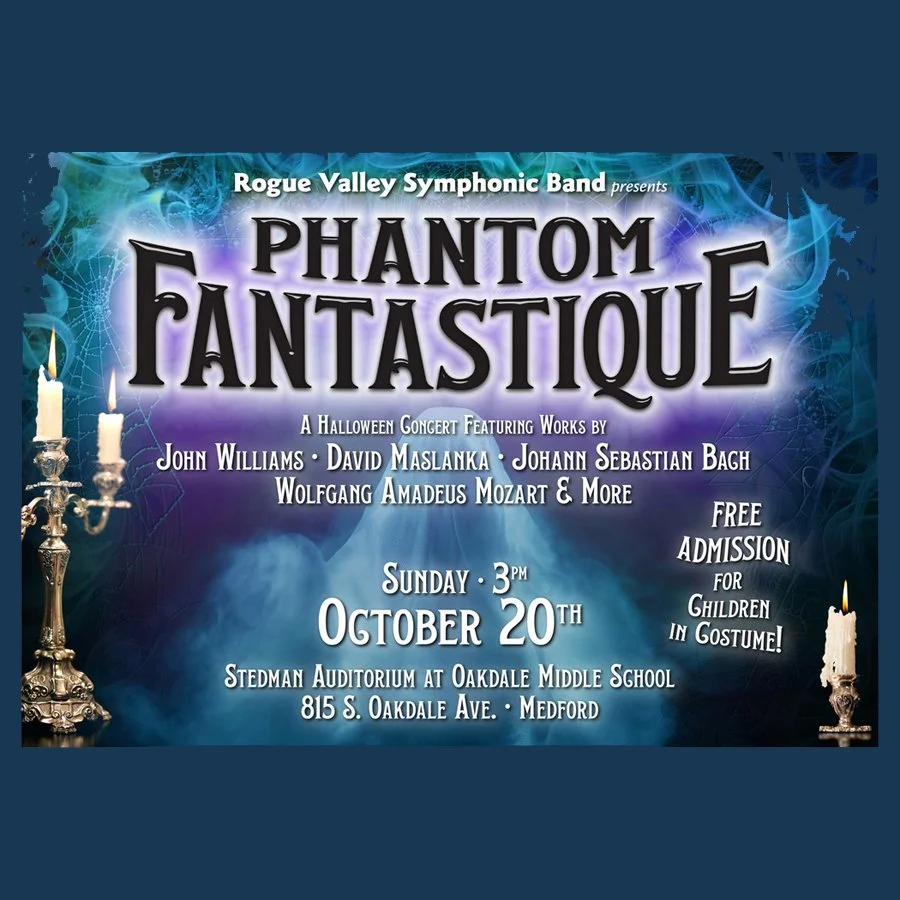
"Phantom fantastique" concert, October 2024
-

"SUMMER" Concert, May 2024
-

"SPRING" Concert, March 2024
-

"The Sounds of the Season" Concert, December 2023
-

"Halloween Harvest, October 2023
-

"Timeless" Concert, May 2023
-

"Home of the Brave" Concert, March 2023
-

"The Sounds of the Season" Concert, December 2022
-

"Spellbound" Concert, October 2022
-
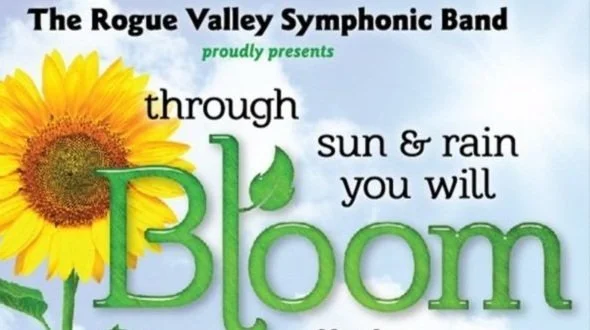
"Bloom" Concert, May 2022
-

"Lift Every Voice" Concert, March 2022
-

"The Sounds of the Season" Concert, Holiday 2021
-

"Monsters & Mayhem" Concert, Fall 2021